TABLE OF CONTENTS
The upfront cost for a 20-foot (approx. 6-meter) tree in Melbourne can range from $800 to over $4,000, factoring in species, nursery price, and professional installation. However, the true cost is best understood through its long-term 'amenity value'—an asset valuation considering its contribution to your property and the environment.
It’s one of the most common questions we hear at Plan-It Lawn And Landscaping tree service, and on the surface, it seems simple. You have a vision for your property—perhaps a beautiful flowering tree as a centerpiece in your Camberwell garden, or a row of evergreen trees creating a privacy screen for your home in Brighton. You know the size you want: a substantial, semi-mature tree that offers immediate impact. But when you start looking for a price, you find that the answer is anything but straightforward.
The sticker price at a garden center is just the beginning of the story. Instead of focusing solely on that initial number, the most intelligent way for Melbourne property owners to approach this is to reframe the question. Don't just ask about the cost of a tree; ask about its value. The intelligent way to assess the cost of a 20-foot tree in Melbourne is to understand its long-term 'amenity value', a formal valuation concept used by Australian arborists that considers species, health, and location as a true measure of your investment.
Deconstructing the Upfront Cost of a 20-Foot Tree
Before we explore the concept of value, it's essential to understand the components that make up the initial price. The total cost to plant tree specimens of this size is a sum of several distinct parts, each with its own variables.
Nursery Price and Pot Size
The first figure you'll encounter is the nursery or tree supply price. This is not a fixed number. For a 20-foot tree, you're looking at what the industry calls an 'advanced tree' or 'semi-mature tree'. These trees have been grown by a wholesale nursery for several years, often between five and ten. The price is influenced by:
- Species: A common Ornamental Pear or Lilly Pilly will have a different price point than a rare Japanese Maple or a slow-growing Magnolia Tree.
- Maturity & Caliper: The age and thickness of the trunk significantly affect the price. The purchase price for mature trees is highly variable; an eight-year-old tree can cost up to $4,000, while older ones can cost $10,000 or more.
- Pot Size: Advanced trees are sold in large pot sizes, often 100 litres or more, which reflects the health and establishment of the root system. A larger, more developed root ball means a healthier tree, but a higher cost.
Delivery and Logistics
A 20-foot tree is not something you can bring home in the back of a car. It requires specialised transport, often a flatbed truck with a crane. The tree delivery fee will depend on the distance from the nursery to your property and, crucially, site accessibility. A straightforward delivery to a property in the Western Suburbs of Melbourne with wide access is very different from navigating the tighter streets of an inner-eastern suburb like Toorak, which can increase labor costs and the need for specialised equipment.
The Crucial Cost: Professional Tree Installation
This is where the investment truly takes root. DIY tree planting is not recommended for a specimen of this size. The health and survival of your expensive new tree depend entirely on proper planting. Professional planting service fees from a qualified landscaper or certified arborist cover several critical steps:
- Site Preparation: This involves excavating a hole significantly larger than the root ball, ensuring proper drainage, and assessing the soil condition.
- Soil Amendment: Melbourne soil can vary dramatically, from the sandy loam in Bayside areas to heavy clay in the northern suburbs. The soil may need to be improved with organic matter to give the tree the best start.
- Planting & Positioning: The labor of carefully moving a heavy tree, placing it at the correct depth, and orienting it for optimal growth and aesthetic appeal.
- Tree Staking & Mulching: Essential for supporting the tree against Melbourne's winds while its roots establish, and for retaining moisture in the soil.
- Initial Irrigation Plan: Ensuring the tree receives adequate water during its critical establishment phase.
Skipping this professional step to save a few hundred dollars is the quickest way to turn a multi-thousand-dollar asset into a future tree removal problem.
Beyond the Price Tag: Understanding a Tree's True Amenity Value
Now, let's shift our perspective. A tree isn't a piece of outdoor furniture; it's a living, growing asset. Its value appreciates over time, unlike almost any other element of your landscape. This is where the concept of 'amenity value' becomes so important.
What is 'Amenity Value'?
Amenity value is a formal appraisal of a tree's contribution to a property and its surroundings. It goes beyond the simple timber value. In fact, in 2020, Melbourne updated its formal tree valuation formula to include 'amenity value,' a variable that considers the tree's species, aesthetics, locality, and condition. This method acknowledges that a magnificent, healthy shade tree in a Port Phillip backyard provides quantifiable benefits—shade that reduces energy costs, improved air quality, stormwater management, and increased property value—that a simple purchase price ignores.
The Burnley Method: An Australian Standard for Tree Appraisal
How does a certified arborist calculate this value? In Australia, one of the most respected methods is the Burnley Method. This formal tree appraisal formula provides a systematic way to assign a monetary value to a tree. It's not just a guess; the Australian 'Burnley' method is a formal tree appraisal formula, compared in a 2002 study to other international methods from around the world. It considers factors like:
- Size: The dimensions of the tree.
- Life Expectancy: How many more years the tree is expected to provide benefits.
- Form & Vigour: The health and structural integrity of the tree.
- Location: Its placement and contribution to the landscape and property.
This is how we begin to understand the real cost of a tree—by calculating its potential as a long-term asset.
A Tale of Two Investments: Purchase Price vs. Amenity Value
When you're deciding on a 20-foot tree, you are choosing between two philosophies. Here’s how they compare:
Focusing on Simple Purchase Price
This approach prioritises finding the lowest possible upfront cost for a tree of a certain height. It's a short-term view that treats the tree as a commodity. While it seems financially prudent at first, it often leads to selecting a less suitable species or skimping on professional installation, which can result in a struggling tree that fails to thrive and may require expensive tree removal services down the line.
Focusing on Long-Term Amenity Value
This approach treats the tree as a strategic investment. It involves a higher initial outlay for a premium, healthy specimen of a species perfectly suited to your Melbourne location. It always includes professional arborist services for planting and a plan for future care, such as formative tree pruning. The result is an asset that grows in monetary, aesthetic, and ecological value every year, enhancing your property and quality of life for decades.
Key Factors Driving a Tree's Cost and Future Value in Melbourne
Whether you're looking at the initial cost or the future value, several key decision factors come into play. A professional landscaper or arborist will guide you through these considerations.
Tree species and suitability
The type of tree is paramount. Are you looking for deciduous trees that provide summer shade and winter sun, or evergreen trees for year-round screening? Native Australian trees like a hardy Eucalyptus or a flowering Bottlebrush (Callistemon) are adapted to Melbourne's climate and support local wildlife. Conversely, introduced species like a Crepe Myrtle or Silver Birch can offer unique aesthetic qualities. The right choice depends on your specific goals and the microclimate of your property, whether you're near the coast on the Mornington Peninsula or further inland.
Long-term ecological benefits
A mature tree is an ecological powerhouse. Its canopy provides shade, cooling your home and reducing summer energy bills. It absorbs carbon dioxide, filters pollutants from the air, and helps manage stormwater runoff. Choosing a species that maximizes these benefits adds to its overall amenity value.
Tree health and condition
When you get a tree quote from a reputable provider, you are paying for quality. A healthy, vigorous tree with a well-developed root system and good structure will establish faster and be more resilient to pests, diseases, and drought. This reduces future garden maintenance costs and the potential need for expensive tree surgeon fees or repair work.
Location and contribution to property value
Where you plant the tree is as important as what you plant. A well-placed shade tree can make a deck or patio usable on a hot summer day. A beautiful specimen in the front yard can dramatically increase curb appeal and, consequently, your property's market value. We also need to consider council permits, as some municipalities in the greater Melbourne area have regulations regarding planting near property lines or utility services.
Total cost including installation and maintenance
It's vital to think about the entire lifecycle cost. The purchase and installation are just the beginning. While a healthy tree requires minimal intervention, some ongoing care like periodic pruning will be necessary. This is a far cry from the significant cost of tree removal for a dead or poorly chosen tree. As a benchmark, consider that the total cost of a Melbourne street tree extends far beyond its purchase price; a standard establishment cost of $1,113 can lead to an estimated 30-year total cost of $2,653.65 including maintenance. Your private tree is a similar long-term commitment.
From Purchase to Asset: Why a Certified Arborist is Your Most Valuable Partner
When making an investment of this size, you need an expert guide. While the staff at a garden center can tell you about the trees they have in stock, a certified arborist provides a far more comprehensive service. An arborist's role is not just to sell you a plant; it's to ensure your investment thrives and appreciates in value for its entire life expectancy.
A consultation with an arborist from Plan-It Lawn And Landscaping involves assessing your property's specific conditions—soil type, sun exposure, space constraints, and your personal aesthetic goals. We can then recommend the perfect species that will flourish in your part of Melbourne, provide a detailed cost estimate for the tree supply and installation, and create a long-term care plan. This professional guidance is the key to transforming a simple purchase into a lasting, valuable asset.
Answering Your Common Questions About Tree Costs
Let's directly address some of the questions that might still be on your mind.
How much does a 20 foot tree cost?
As we've detailed, the average cost is highly variable. A straightforward installation of a common 20-foot species might start around $800-$1,500, but a premium, mature specimen with complex site access could easily exceed $4,000 or more once delivery and professional planting services are included.
How much does it cost to have a 20 ft tree cut down?
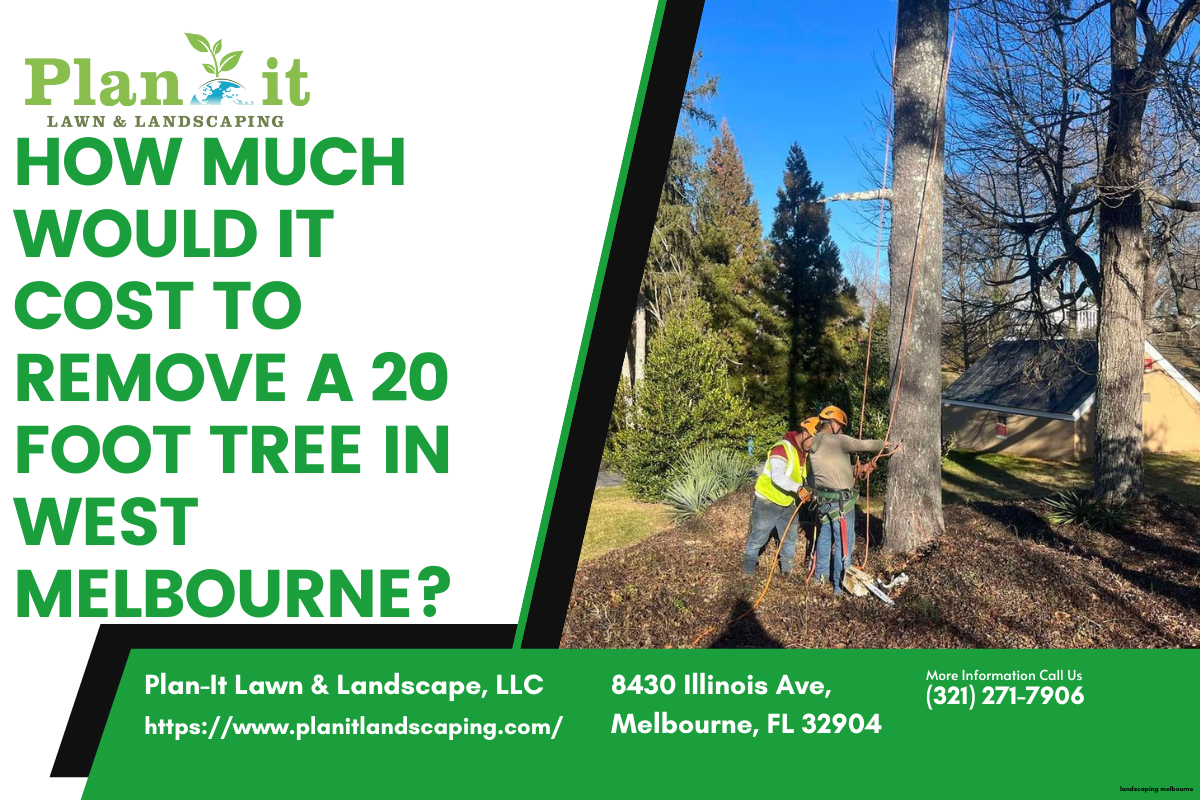
The cost of tree removal for a 20-foot tree in Melbourne typically starts around $500 but can quickly rise to over $1,500. Factors that increase the price include difficult access, proximity to buildings or power lines, and the need for stump grinding. In many cases, the cost to remove a failed tree can be as much as, or even more than, the original cost of installation.
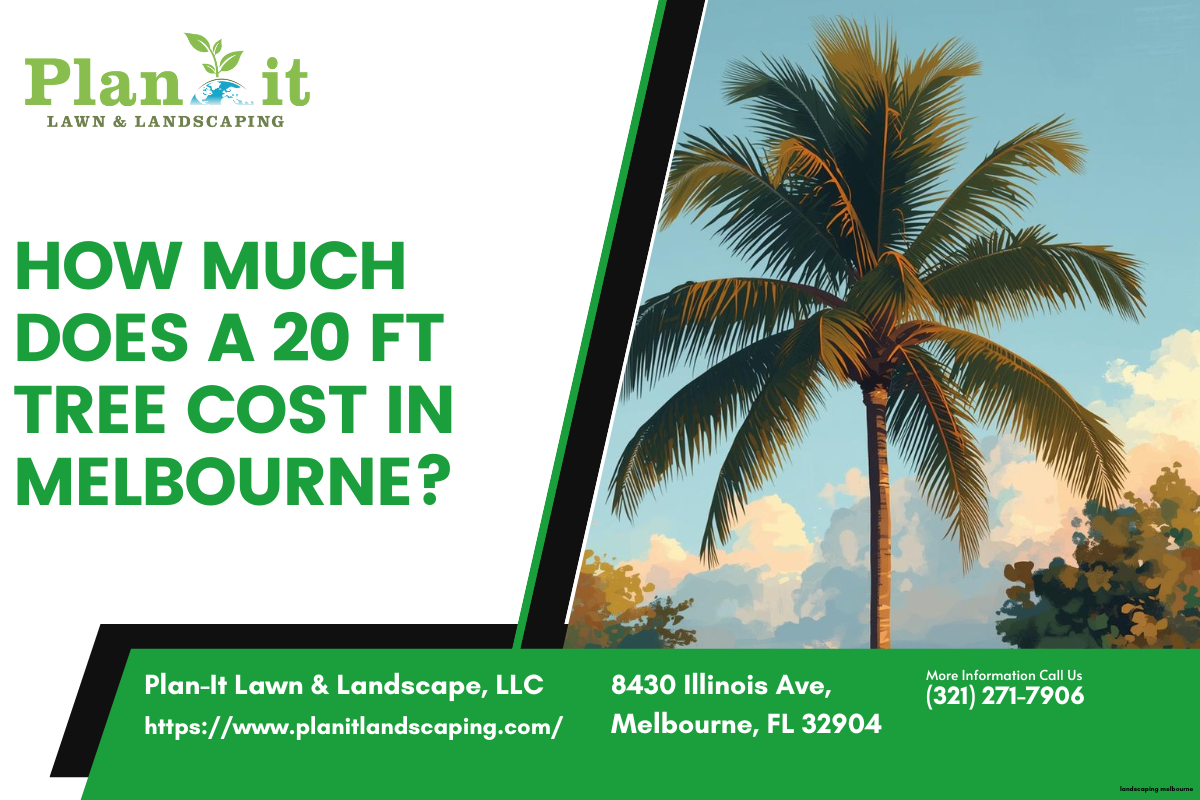
How much does a 20 ft palm tree cost?
Palm trees have a different cost structure. While some common varieties can be relatively inexpensive, popular mature species can be quite costly. The installation can also be more specialised. Their price is heavily dependent on the species, trunk height, and maturity. For an accurate price guide, a specific quote is necessary.
How to calculate the cost of a tree?
There are two ways. The simple way is to add the nursery price + delivery fee + planting service fee to get your upfront cost. The expert way, which we advocate, is to also consider the future. This involves a professional assessment using principles from the Burnley Method to choose a tree that will have a high future amenity value. This method also considers other valuation metrics, for instance, the indicative 'stumpage' (royalty) paid for timber in Australia ranges from $25–$35+ per cubic meter, based on species and quality, showing how even raw materials have complex value—let alone a living landscape asset.
Making the Right Choice for Your Needs
The best approach depends entirely on your specific objectives. There isn't one "right" answer, but there is a right strategy for your situation.
For Property Developers & Homeowners
Your primary goal is likely maximizing curb appeal and property value. Focus on species known for their aesthetic impact and longevity in Melbourne. Investing in a premium specimen and professional installation provides a near-immediate return through enhanced street presence and will be appraised as a significant asset upon resale. Think of it as a capital improvement, not an expense.
For Municipal Planners
You are managing a long-term urban forest. The focus should be on the total lifecycle cost, resilience to climate change, and public amenity value. Selecting diverse, hardy native and exotic species that require minimal long-term maintenance and provide maximum canopy cover and ecological services is the most fiscally and environmentally responsible approach.
For Environmental Advocates
Your focus is on ecological function. The priority should be selecting native tree species that provide habitat and food for local wildlife, contribute to biodiversity, and are well-suited to the local soil and rainfall patterns. The "value" is measured in the health of the local ecosystem and the tree's contribution to a greener Melbourne.
Ultimately, understanding the true cost of a 20-foot tree is about seeing the bigger picture. It's about recognizing that the right tree, planted professionally, is an investment that pays dividends for decades in beauty, enjoyment, and tangible value. At Plan-It Lawn And Landscaping, our professional, dependable approach ensures you get more than just a tree; you get a thriving, long-term asset for your property. For a comprehensive tree quote that considers the long-term value for your Melbourne property, contact our team of certified arborists and landscape experts today.

Featured Posts





.png)