TABLE OF CONTENTS
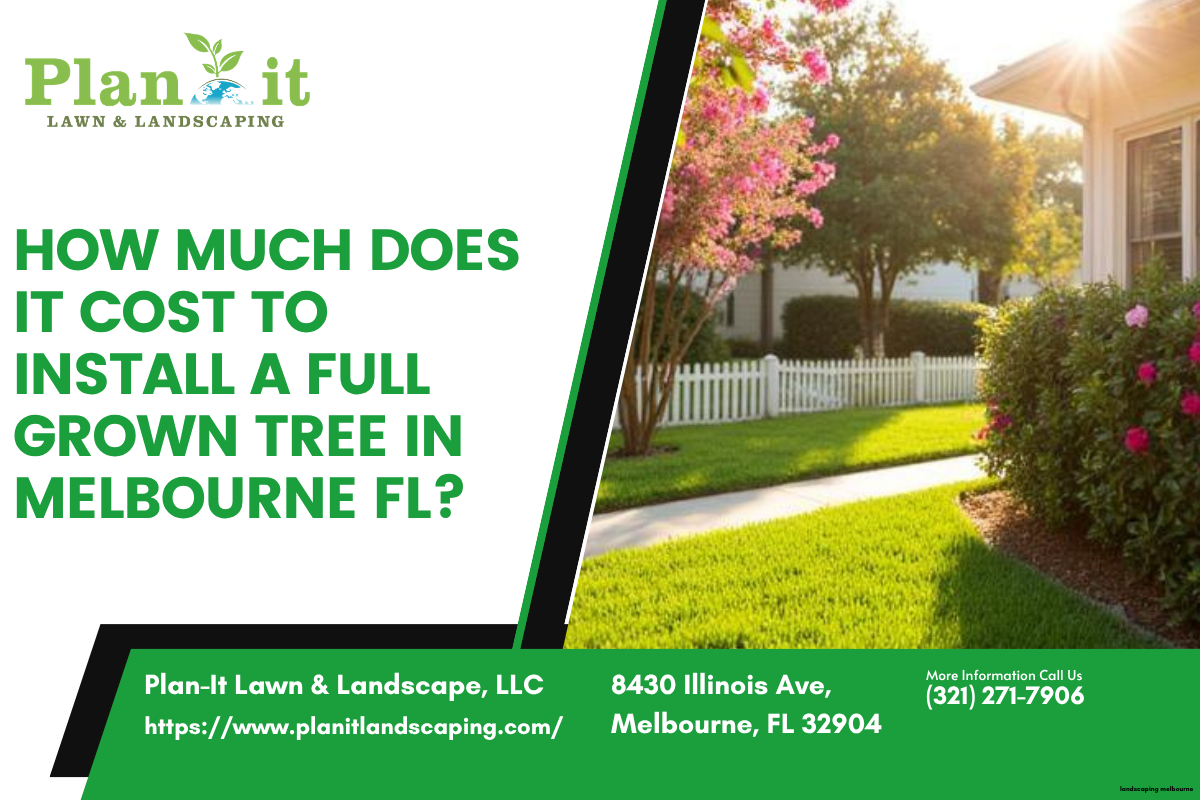
For a full-grown tree service in Melbourne, FL, homeowners can expect to pay anywhere from $1,500 to over $5,000. The total cost depends on the tree's size, species, and site accessibility. However, the true investment is measured by the 'cost per surviving tree,' a figure determined by nursery quality and post-planting care.
There's nothing quite like the immediate impact of a mature tree. One day your yard is exposed to the full force of the Florida sun; the next, you have a majestic Live Oak or a graceful Magnolia providing instant shade, curb appeal, and a sense of permanence. For homeowners across Melbourne, Viera, and Palm Bay, this transformation is a highly desirable landscape upgrade. But before you call the first number you find for tree spade services, it's critical to understand that the price tag on the tree is just the first chapter of the story.
The most common mistake we see in Brevard County is focusing solely on the upfront tree installation quote. The real metric, the one that determines the success of your investment, is the 'cost per surviving tree.' A cheap tree that dies within a year is infinitely more expensive than a premium tree that thrives for decades. The true cost is a conjunction of the initial price, the nursery production method that created its root system, and the strategic irrigation plan required for it to survive its first brutal Space Coast summer.
Beyond the Price Tag: Why 'Cost Per Live Tree' is the Only Metric That Matters
Investing in a mature tree is a significant financial decision. The initial cost to plant an extra-large tree (20-30 feet) can range from $2,050 to $4,000, a figure that includes the tree, delivery, and professional planting service. When you're making that level of investment, failure is not an option. This is why shifting your mindset from "purchase price" to "cost per live tree" is so essential.
Imagine two scenarios for a new residential landscaping project in Rockledge:
- Scenario A: You opt for a large, seemingly bargain-priced shade tree for $2,200, installed. It looks great for a few months, but its poorly developed root system, damaged during harvest, can't handle the transition. Despite your best efforts, it fails by the next year. Your total cost is $2,200 for a dead tree and a new hole in your yard, plus the cost of tree hauling and disposal.
- Scenario B: You work with a certified arborist who recommends a slightly smaller but superior quality tree for $2,800. This tree was grown using methods that encourage a dense, healthy root system. It undergoes a smooth tree acclimation period and thrives. Your cost per live tree is $2,800, and you now have a growing asset that increases your property value.
The second scenario is obviously the better way to go. The initial planting estimate was higher, but the final value is infinitely greater. Your goal isn't just to have a tree delivered; it's to have a tree that will grow, provide shade for years to come, and enhance your property. This success story begins long before the tree ever arrives at your home; it begins at the nursery.
Not All Roots Are Equal: How Nursery Methods Dramatically Affect Survival and Long-Term Costs
The single most important factor for long-term tree survival is the quality of its root ball. The entire canopy you see is supported by this unseen foundation. The manner in which a tree is grown at the nursery directly dictates the health and structure of that foundation. Here’s a breakdown of the common production methods and what they mean for your investment.
Field-Grown (Balled-and-Burlapped or B&B)
This is the traditional method for growing large trees. They are grown in a field and, when ready for sale, dug up by a large machine like a tree spade. The root ball size is contained in burlap. The quality of B&B trees varies enormously and depends almost entirely on one factor: root pruning. A reputable tree farm will prune the roots in the field over several years, encouraging a dense, fibrous root system close to the trunk. A low-cost grower may simply dig up an un-pruned tree, severing up to 95% of its essential roots in the process. While this method can produce very large specimen trees, the risk of transplant shock is high if not handled by expert full grown tree movers. However, when done right, the results are exceptional. In fact, a University of Florida study found something remarkable: the lowest 'cost per surviving tree' in their trial was $274, a figure achieved with a root-pruned field-grown (B&B) tree that received no summer irrigation. This shows that a superior root system can be more critical than excessive watering.
Standard Container-Grown
These are trees grown their entire lives in a smooth, black plastic pot. While this method reduces transplant shock since 100% of the roots come with the tree, it has a major hidden danger: circling roots. As the roots grow and hit the side of the container, they turn and begin to circle the inside of the pot. If not corrected at planting, these roots will continue to grow in a circle, eventually girdling and strangling the tree years after you thought it was successfully established. This is a common and tragic problem for many landscaping services that prioritize low upfront tree nursery prices.
Advanced Containers (Air Root Pruning)
A far superior way involves using containers with holes or vertical ribs on the sides. When a root tip reaches one of these openings, it is dehydrated by the air ("pruned"), which signals the tree to create many more fibrous feeder roots behind the tip. This process creates a dense, healthy root system without the danger of circling. These trees often establish much faster after planting. However, this superior root system comes with a critical requirement: consistent moisture during the establishment phase. This is where the second part of the UF study provides a crucial lesson for anyone in our USDA Hardiness Zone 9b. The study found the 'cost per live tree' for a low-profile air root pruning container tree soared from an affordable $445 with summer irrigation to an astonishing $1,176 with no summer irrigation. The takeaway is clear: the production method and the post-planting care plan must be perfectly aligned.
Decoding the Full Installation Cost in Melbourne, FL
When you receive a tree installation quote, it should be more than a single number. A professional, turnkey tree planting package will break down the costs so you know exactly what you're paying for. Here are the components that come into play.
The Tree Itself: Caliper Inch Pricing and Species
Large trees aren't priced by height, but by the diameter of their trunk, or "caliper." Caliper inch pricing is the industry standard. A 4-inch caliper Live Oak tree price will be significantly higher than a 2-inch caliper Crepe Myrtle. The cost to plant a palm tree, like a Sabal Palm installation, is often priced by trunk height rather than caliper. Sourcing a specific specimen tree, like a mature Gumbo Limbo or a large Magnolia Tree, will also affect the final price.
Labor and Equipment: From Tree Spade to Crane Service
Installation labor costs cover the crew's time and expertise. This includes crucial site preparation, such as excavation costs and ensuring the proper backfill soil and soil amendments are used. For very large trees, the quote will include heavy equipment rental. This might be a tree spade for the primary move or, if site accessibility is limited—like in a fenced backyard in Indian Harbour Beach—a crane service for trees might be required to lift the tree over the house.
Logistics and Add-ons You Shouldn't Skip
Tree delivery fees are standard, varying based on the distance from the tree farm. Once on site, other services are critical for success. These include proper mulching services to retain soil moisture, and tree staking and guying to keep the tree stable until its roots anchor it. For trees planted near driveways or foundations, installing a tree root barrier is a wise preventative measure. Any reputable arborist consultation will include these elements in the planting estimate.
The Paperwork: Tree Planting Permits in Brevard County
For most residential tree plantings, you won't need a tree planting permit. However, for very large commercial tree planting projects or those involving significant land clearing or stump grinding, regulations may apply. It's important to know the local rules. For instance, in Melbourne's neighboring city of Rockledge, any construction project with a value over $5,000 requires a recorded Notice of Commencement. While a single tree might not hit this threshold, a full landscape overhaul could. A licensed and insured arborist will be familiar with these local terms and regulations.
The Hidden Multiplier: Irrigation's Critical Role in Brevard County
You can source the perfect tree, but if you don't manage water correctly during its first year, you risk losing your entire investment. Our sandy soils drain quickly, and the summer heat places immense stress on a new tree trying to establish its roots. This is the post-planting tree care phase, and it's non-negotiable.
A simple hose and a prayer are not an irrigation strategy. For a large specimen tree, a dedicated drip irrigation system is the most effective and efficient solution. While this adds an upfront cost for irrigation system installation, it delivers water slowly and directly to the root ball, where it's needed most. This small investment pales in comparison to the cost of replacing a dead tree. The goal is to provide consistent moisture to aid in tree acclimation and encourage roots to grow out into the native soil. This approach is a core principle of Florida-Friendly Landscaping™ and is the best way to ensure the survival of both native Florida trees and other well-adapted species.
Choosing Your Project Partner: Certified Arborist vs. General Landscaper
When you're ready to move forward, who do you call? While many Space Coast landscapers can plant a tree, a project of this scale benefits from a higher level of expertise. A certified arborist brings a scientific understanding of tree health. They will perform a thorough on-site assessment and a tree health assessment before a single shovel hits the ground.
A true professional will always insist on calling 811 for an underground utility location service to ensure no gas or water lines are hit during excavation. They can provide a tree warranty and have the knowledge to select and install the right tree for your specific conditions, maximizing your chance of long-term success. This is the difference between simply buying a tree and making a lasting investment in your property.
Frequently Asked Questions
During an arborist consultation, we discuss everything from soil science to canopy spread. But sometimes, other questions come up. Here are a few we've heard, covering topics from landscaping to language.
How do I make a good impression with my landscape?
A well-placed, healthy, and mature tree is one of the most powerful ways to make a good impression. It signals permanence, care, and an investment in your property that speaks volumes to neighbors and visitors. A majestic shade tree installation is a landscape feature that provides value from the day it's planted.
Why do people say albeit?
This is a word you might see in a formal contract or written quote. "Albeit" is a somewhat old english conjunction that simply means "although" or "even though." According to the Merriam-Webster dictionary, it's used to introduce a fact or comment that reduces the force of what you just said. For example: "The tree required a crane service, albeit for a very short lift, which added to the cost."
What does call off mean?
To "call off" something means to cancel it. In our line of work, we strive to provide such a clear and transparent tree installation quote that you'll never have a reason to call off the project due to unexpected costs.
What does HNY mean in texting?
HNY is a common abbreviation used in text messages that stands for "Happy New Year." While it doesn't have much to do with our 2026 tree planting season, we're happy to clear it up!
Making the Right Choice for Your Melbourne Home
There is no single "best" tree or "best" price. The right choice is a careful balance of your budget, your property's needs, and your long-term goals. The following profiles can help guide your decision.
The Budget-Conscious Homeowner
Your focus is on achieving the look of a mature tree without the highest upfront cost. Your best strategy is to focus on smaller (e.g., 2-3 inch caliper) but exceptionally healthy trees from a nursery known for quality container stock. Ask to see the root flare and avoid any trees that are root-bound. Be prepared to be personally diligent with your post-planting care, especially the watering schedule for the first year. A smaller, well-cared-for tree will often outgrow a larger, stressed tree within a few years.
The Investment-Minded Property Owner
You view a mature tree as a long-term asset that adds significant value and enjoyment to your home. You should seek out a professional tree installer or certified arborist who specializes in specimen tree sourcing. Don't shy away from the higher upfront cost of a properly root-pruned B&B tree or an advanced container-grown specimen. Insist on a delivery and installation package that includes a tree warranty, soil amendments, and a plan for tree fertilization. For you, the higher initial cost is a smart insurance policy on a major investment.
The Avid DIY Gardener
You have the knowledge and willingness to be hands-on, but you want to start with the best possible materials. Your time is best spent researching and visiting local tree farms and nurseries. Ask them specific, technical questions about their growing methods. You know the importance of roots. You should invest in the highest quality tree you can afford and handle the site preparation and installation yourself or with minimal help. You'll likely want to install your own dedicated drip irrigation line to ensure your new tree gets the perfect amount of water.
Ultimately, successfully adding a mature tree to your Melbourne landscape is about planning for its survival, not just its delivery. By focusing on the 'cost per live tree' and understanding how nursery quality and irrigation are intertwined, you can make a confident decision that will provide shade, beauty, and value for many years to come.
For a detailed on-site assessment of your property and a transparent tree installation quote focused on long-term success, contact our team of licensed and insured professionals today. We’re here to help you make a smart, lasting investment in your Brevard County landscape.

Featured Posts





.png)